Best Wireless Earbuds for Sleeping
This article compares six wireless sleep earbuds for 2026, looking at comfort, noise reduction, battery life, and smart features to help you find the right product for your sleep needs.
Finding the Right Wireless Earbuds for Sleep
Finding wireless earbuds that are comfortable enough to sleep in isn't easy. You might want a thin, lightweight design that won't put pressure on your ears when you sleep on your side, something that blocks your partner's snoring, or a way to listen to your favorite music and podcasts throughout the night. Fortunately, there are now more wireless sleep earbud options. Below, we'll look at six distinctive options to see which one is the best fit for your nights.
The 6 Best Wireless Earbuds for Sleeping in 2026
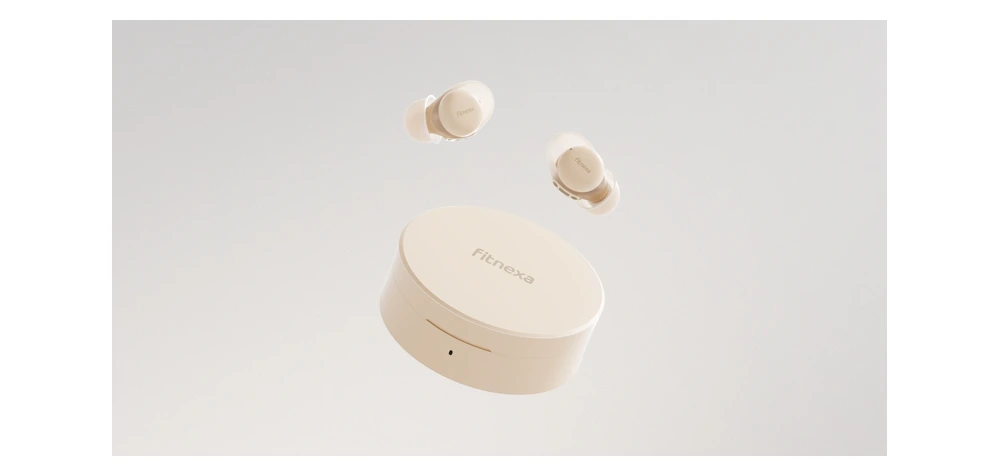
Fitnexa SomniPods 3
Recommendation: Best Value for Money
Pros:
- A low-profile design weighing 3.3 g per earbud and measuring less than 9.9 mm thick, suitable for side sleeping, with multiple sizes of ear tips and wings.
- Supports ANC, passive noise isolation, and sound masking.
- Supports Bluetooth streaming, local audio playback, and calls.
- Supports wireless charging, with up to 48 hours of total battery life with the charging case.
- Includes a timer that automatically turns ANC off.
Cons:
- Rated battery life with ANC on is about 6.5 hours, so continuous noise cancellation is not guaranteed for a full night.
- Sleep Mode, Auto Mode, and Bluetooth Mode take some time to learn.
- The audio stored on the earbuds cannot be freely replaced.
- Sleep tracking relies mainly on motion sensors and provides a limited range of physiological data.
- Some advanced AI features require a subscription.
Hands-on reviews from Wareable, Tom's Guide, and Gadgets & Wearables have generally rated its comfort and noise reduction positively, while pointing out limitations in ANC battery life and software usability. Its biggest strength is offering a fairly complete sleep-earbud experience at a relatively reasonable price.
Ozlo Sleepbuds 2
Recommendation: Best for All-Night Comfort
Pros:
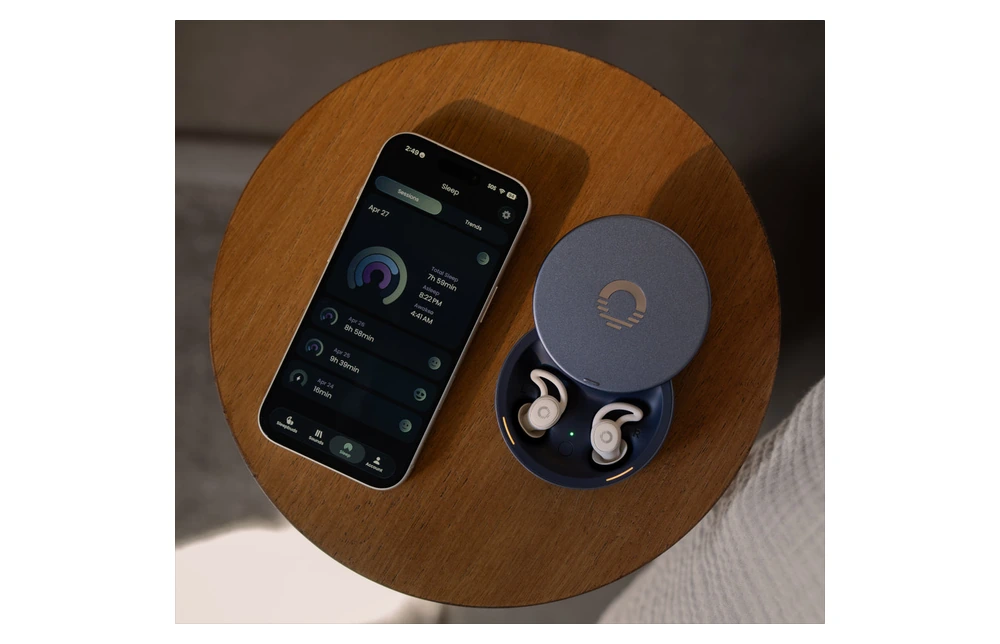
- Without the silicone ear tips, each earbud weighs just 1.6 g and measures 11 mm high. Its compact size makes it suitable for extended wear.
- Rated for up to 14 hours of battery life.
- Supports Bluetooth streaming and adaptive sound masking.
- Can automatically switch from streaming to masking audio after you fall asleep.
- Tracks sleep trends and bedroom conditions.
Cons:
- Does not support active noise cancellation (ANC).
- The connection relies on the smart charging case, which limits flexibility to some extent.
- Does not support calls.
- The regular price on the official U.S. website is $279, making it a relatively expensive option.
Ozlo's approach is clear: prioritize comfort and all-night sleep rather than stronger active noise cancellation or more everyday earbud features. It's a strong contender for anyone who puts comfort first.
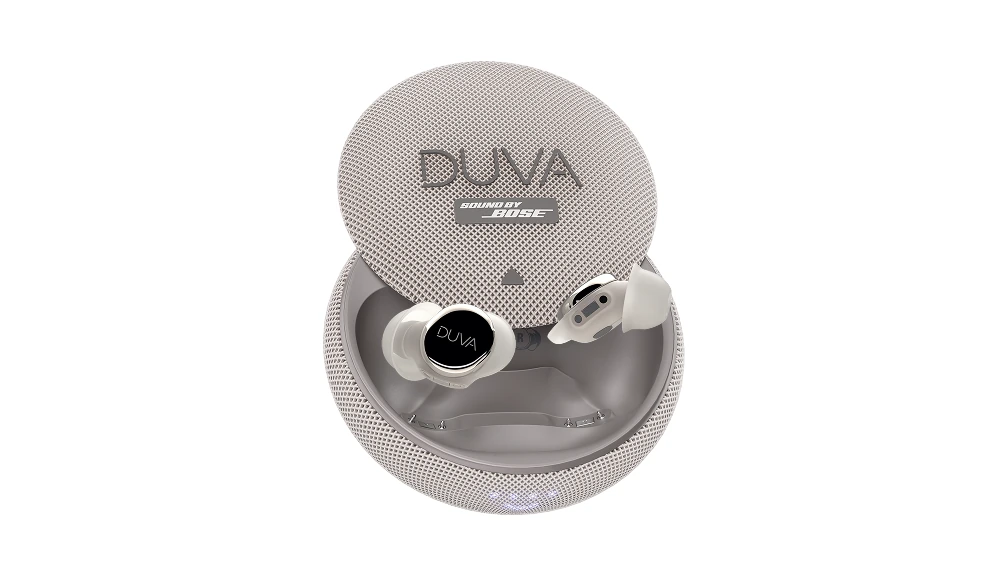
DUVA ONE
Recommendation: Best for Advanced Sleep Technology
Pros:
- The earbuds are 9.6 mm thick and offer 36 combinations of ear tips and wings to accommodate different ear shapes and improve comfort and stability during extended wear.
- Supports Transparency Mode, Enhanced Noise Reduction, and sound masking, with Sound by Bose audio technology.
- Tracks heart rate, HRV, and sleep stages.
- The smart charging case monitors bedroom noise, temperature, humidity, and light.
- The AI Agent combines physiological signals with sleep-environment data to provide adaptive audio support.
- Looks beyond sleep outcomes to the environmental factors that may affect sleep.
Cons:
- Falls in the premium price range.
- Some features may be unnecessary for consumers who only need noise reduction or audio playback.
- As a new product, it lacks long-term independent reviews.
DUVA's real differentiator isn't ANC or PPG. It's bringing physiological data, bedroom-environment data, and adaptive audio together in a single sleep-support system.
Soundcore Sleep 4 Pro
Recommendation: Best for Convenient Sleep Controls
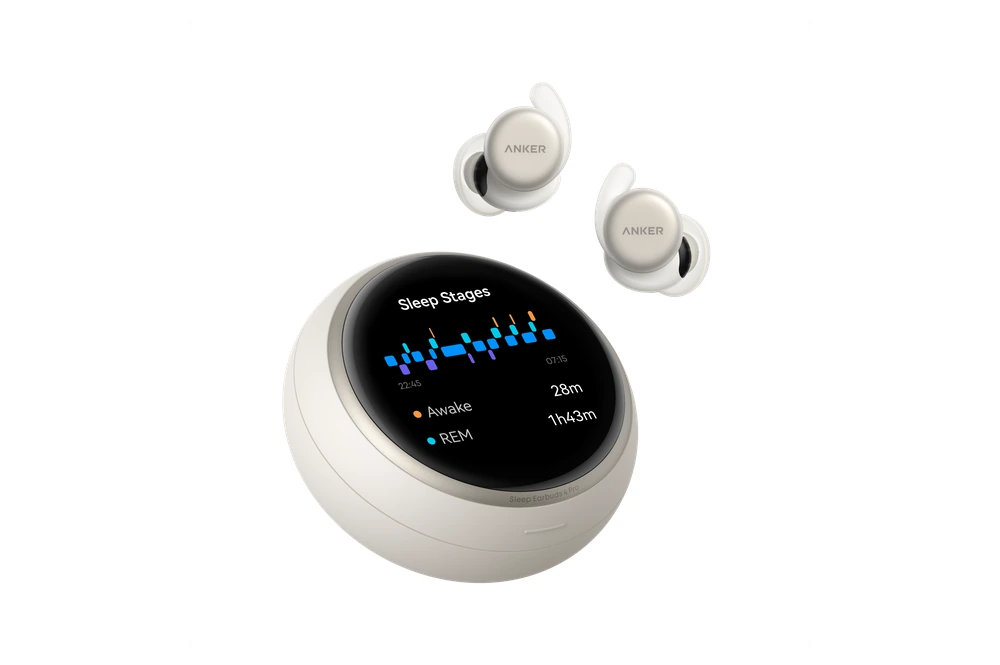
Pros:
- An AMOLED touchscreen charging case lets you control audio, set alarms, and view sleep reports without your phone.
- Supports ANC, passive noise isolation, and adaptive snore masking.
- Built-in PPG sensors track heart rate, HRV, and sleep stages.
- BioSync can adjust relaxation audio based on heart rate signals.
- Supports Bluetooth 6.0 and wireless charging.
- The area in contact with the ear is 20% smaller than on the A30.
Cons:
- Priced at $349.99, making it a substantial investment.
- Rated for 8 hours of battery life with Bluetooth and ANC both on, leaving little margin for a full night's use.
- BioSync is currently an experimental feature, and its real-world effectiveness as a sleep aid still needs to be established.
- As a new product, it lacks long-term user feedback.
This is also DUVA ONE's most direct high-end competitor. Both are moving beyond traditional noise-canceling sleep earbuds toward physiological monitoring and adaptive audio.
Soundcore Sleep A30
Recommendation: Best Mid-Range ANC Sleep Earbuds
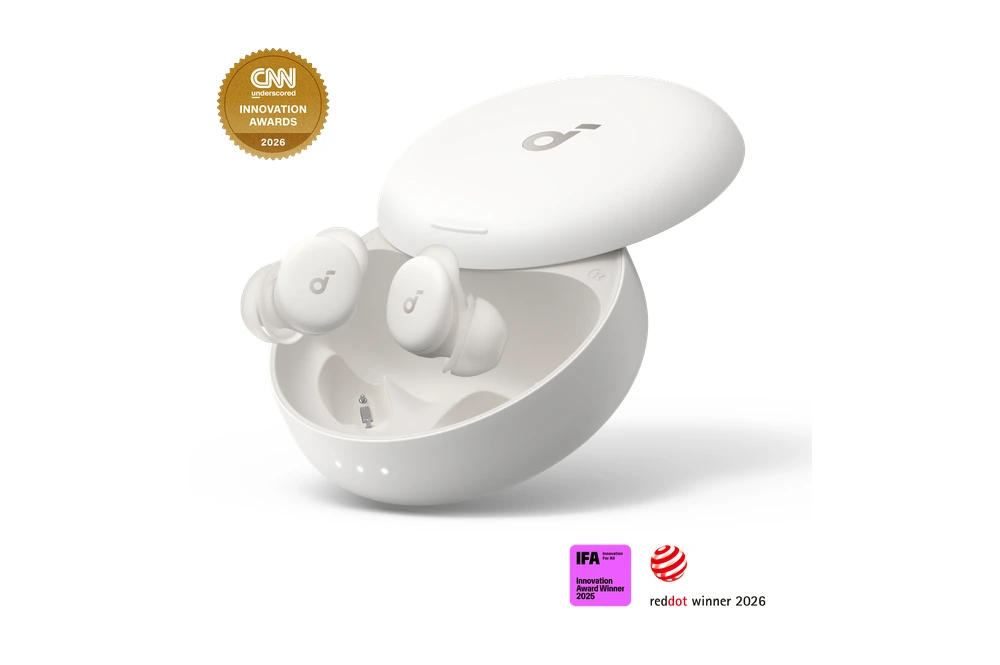
Pros:
- Each earbud weighs about 3 g and measures about 13 mm high. The stemless design comes with multiple sizes of silicone ear tips, memory foam ear tips, and wings to suit different ear shapes and noise-isolation needs.
- Supports active noise cancellation, passive noise isolation, and adaptive snore masking.
- Offers an extensive sleep-sound library and customizable sound mixes.
- The charging case detects external snoring and works with the earbuds to mask it.
- Supports Bluetooth streaming, local audio playback, and calls. Calling must be enabled in the app settings.
Cons:
- Some users report that ANC falls short of expectations, with limited effectiveness against higher-frequency and irregular noise.
- Some firmware versions have issues with inconsistent ANC performance and abnormal background noise.
- Battery life is about 6.5 hours with Bluetooth and ANC both on, making all-night use difficult.
- Automatic sleep detection may misread your state, causing audio to stop or switch prematurely.
- Does not support Transparency Mode or wireless charging.
Who It's For:
Soundcore Sleep A30 is a fairly well-rounded pair of wireless sleep earbuds. Active noise cancellation, passive isolation, adaptive snore masking, and an extensive selection of sleep audio let it meet a range of sleep needs. Still, its real-world noise reduction, side-sleeping comfort, and all-night battery life leave room for improvement. It's a better fit for people with a moderate budget who value a broad feature set and flexible audio settings.
Soundcore Sleep A20
Recommendation: Best for Overnight Bluetooth Streaming
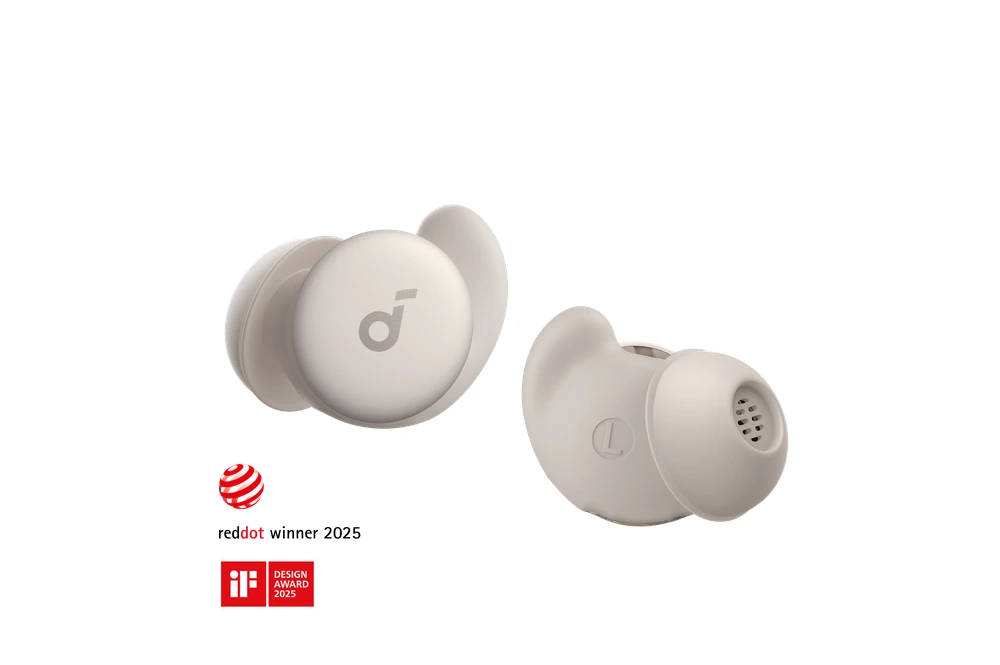
Pros:
- Offers 10 hours of battery life in Bluetooth Mode.
- Offers 14 hours of battery life in local Sleep Mode.
- Uses ear tips and wings designed specifically for side sleeping.
- Supports customizable sleep audio, a private alarm, and basic sleep tracking.
- A relatively simple feature set suits people who just want audio to help them fall asleep.
Cons:
- Does not support ANC.
- Has no active noise cancellation for steady, low-frequency sounds such as air conditioners and traffic.
- Does not support wireless charging or fast charging.
- Does not support calls.
A20 may not be the best choice for particularly noisy bedrooms, but its long battery life still offers real value for people who fall asleep to podcasts, audiobooks, or white noise.
How to Choose Wireless Earbuds for Sleeping
Comfort & Fit
For sleep earbuds, comfort usually matters more than sound quality. When shopping, pay close attention to weight, thickness, how far the earbuds protrude from your ears, the silicone material, and the available sizes of ear tips and wings. Lighter doesn't always mean more comfortable. How well the earbuds fit your outer ear and how pressure is distributed when you sleep on your side are just as important to the wearing experience.
Noise Control
Sleep earbuds reduce noise disturbances in three main ways: active noise cancellation (ANC), passive noise isolation, and sound masking. ANC is better suited to steady, low-frequency sounds such as air conditioners, engines, and traffic. Passive isolation uses a physical seal to reduce the amount of outside sound entering the ear canal. Sound masking plays white noise, brown noise, or other soothing sounds to make sudden noises less noticeable. For people with a snoring partner or a noisy living environment, products that combine several noise-reduction methods are usually worth considering. They reduce reliance on any single method and provide stronger noise reduction.
Battery Life
Actual battery life depends heavily on how you use the earbuds. Bluetooth streaming, local audio playback, active noise cancellation, and sleep tracking all affect power consumption. Rather than focusing only on the longest advertised battery life, consider your sleep habits and check whether the modes you use most can actually last through the night.
Bluetooth & Audio Playback
Some sleep earbuds let you play audio from Spotify, YouTube, Audible, and other third-party apps, while others rely mainly on a built-in library of sleep sounds. If you already have favorite bedtime podcasts, music, or meditations, earbuds with Bluetooth streaming usually offer more flexibility.
Smart Sleep Features
Beyond playing audio and reducing noise, some newer sleep earbuds can track heart rate, heart rate variability (HRV), sleep stages, and bedroom conditions, then adjust their audio or noise-reduction settings based on your sleep state. These features offer extra value for people who want a better understanding of their sleep quality.
Are Wireless Earbuds Safe to Sleep With?
For most healthy adults, using wireless sleep earbuds at a reasonable volume is generally safe. Bluetooth uses low-power, non-ionizing radiofrequency signals. There is currently no reliable evidence that Bluetooth earbuds meeting applicable safety standards cause brain damage.
Long-term sound exposure, ear-canal hygiene, and pressure from extended wear deserve more attention than Bluetooth signals. According to the National Institute on Deafness and Other Communication Disorders (NIDCD), sounds at or below 70 dBA do not cause hearing damage, even with prolonged exposure. If you regularly wear sleep earbuds all night, keep the actual sound level inside your ears below 70 dBA and, whenever possible, use the lowest volume that meets your needs for falling asleep. Choosing ear tips that fit your ears and cleaning your earbuds regularly can also help reduce ear-canal irritation and physical pressure from prolonged wear.
Frequently Asked Questions
Can you sleep with wireless earbuds all night?
Yes. Choose low-profile earbuds designed specifically for sleep, find the right size for your ears, and keep the playback volume low.
What are the best wireless earbuds for side sleepers?
Side sleepers should prioritize a thin design that protrudes as little as possible, with multiple sizes of soft ear tips and wings. Ozlo Sleepbuds 2, DUVA ONE, and Fitnexa SomniPods 3 are all designed for these needs.
Is active noise cancellation necessary for sleep earbuds?
Not necessarily. If your bedroom is relatively quiet, or you mainly use music and podcasts to fall asleep, passive noise isolation and sound masking are usually enough. If traffic, air conditioners, or other steady, low-frequency sounds often disturb you, sleep earbuds with ANC are a better buy.
Can sleep earbuds completely block out snoring?
Usually not completely. Snoring spans different frequencies and constantly changes in volume, so ANC alone cannot eliminate it entirely. For people disturbed by a partner's snoring, earbuds that combine active noise cancellation, passive noise isolation, and sound masking are usually a better fit.
Final Thoughts
Choosing wireless earbuds for sleep doesn't mean you have to chase the strongest noise cancellation, longest battery life, or most smart features. It's about finding a product that truly fits your sleep habits. Side sleepers should pay particular attention to a thin, lightweight design and a comfortable fit. If environmental noise frequently disturbs you, multiple noise-reduction and sound-masking features deserve more attention. And if you fall asleep to music, podcasts, or audiobooks, prioritize Bluetooth connection stability and real-world battery life.
Whatever your budget or needs, the best sleep earbuds to buy are the ones that let you fall asleep comfortably, reduce nighttime disturbances, and make you want to use them every night.