


How Do You Choose Sleep Earbuds for Side Sleepers?
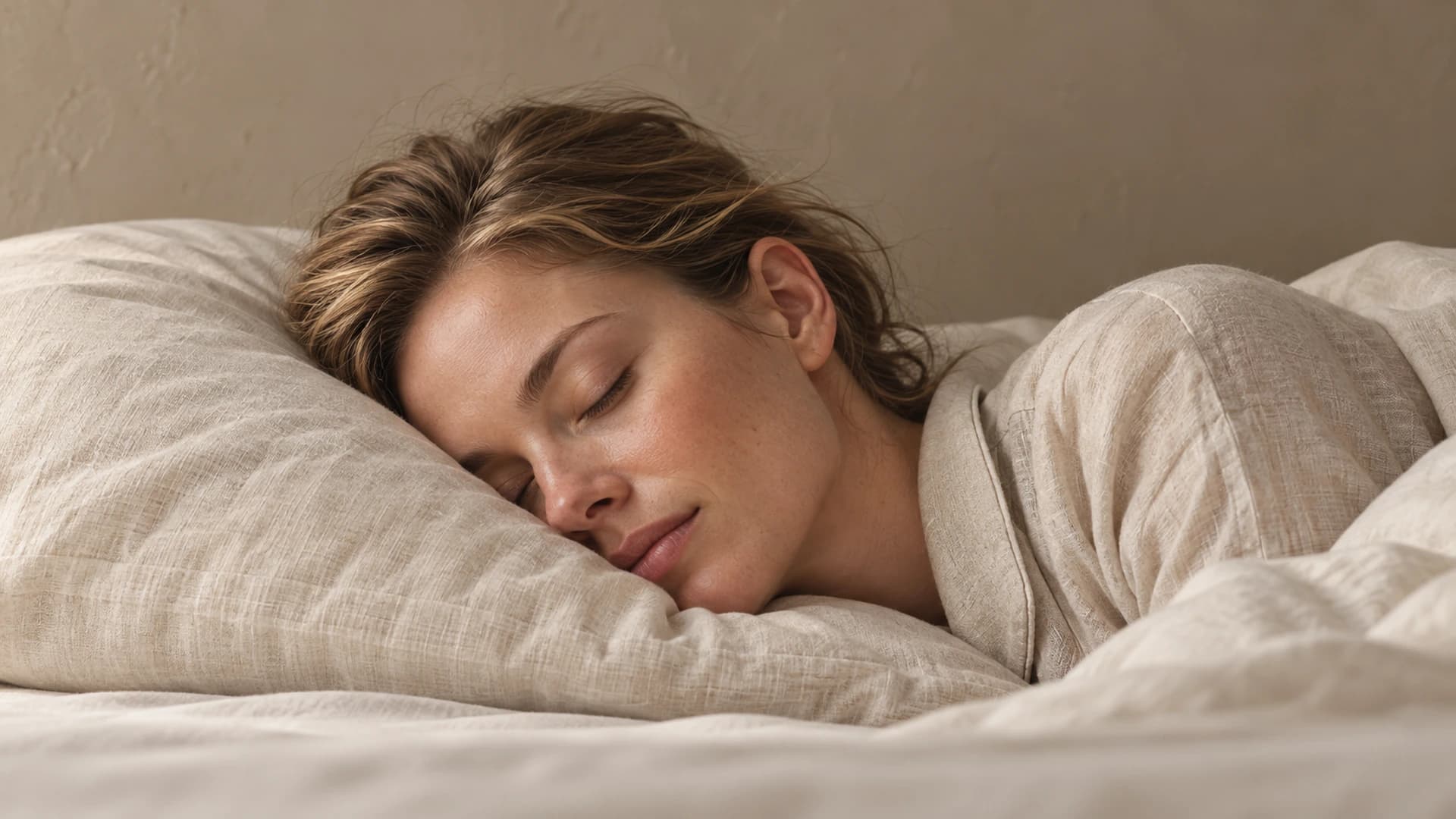
Earbuds that feel comfortable when you are sitting up may press against your ears when your pillow pushes on them as you lie on your side. When choosing sleep earbuds, consider comfort, ear tip fit, noise reduction, and battery life together—and do not overlook nighttime controls or return and exchange policies. Here is what to check before you buy.
1. What Makes Earbuds Comfortable for Side Sleepers?
When choosing earbuds for side sleeping, look at real side-view photos of someone wearing them and consider their shape, materials, dimensions, and weight together. Pay particular attention to which parts will touch the pillow when the earbuds are in place. Here are the key points to check:
Are Lighter Earbuds More Comfortable for Side Sleeping? A lightweight design is a plus, but lighter does not always mean more comfortable. If the housing or ear tips press against your ears, even very light earbuds can feel uncomfortable.
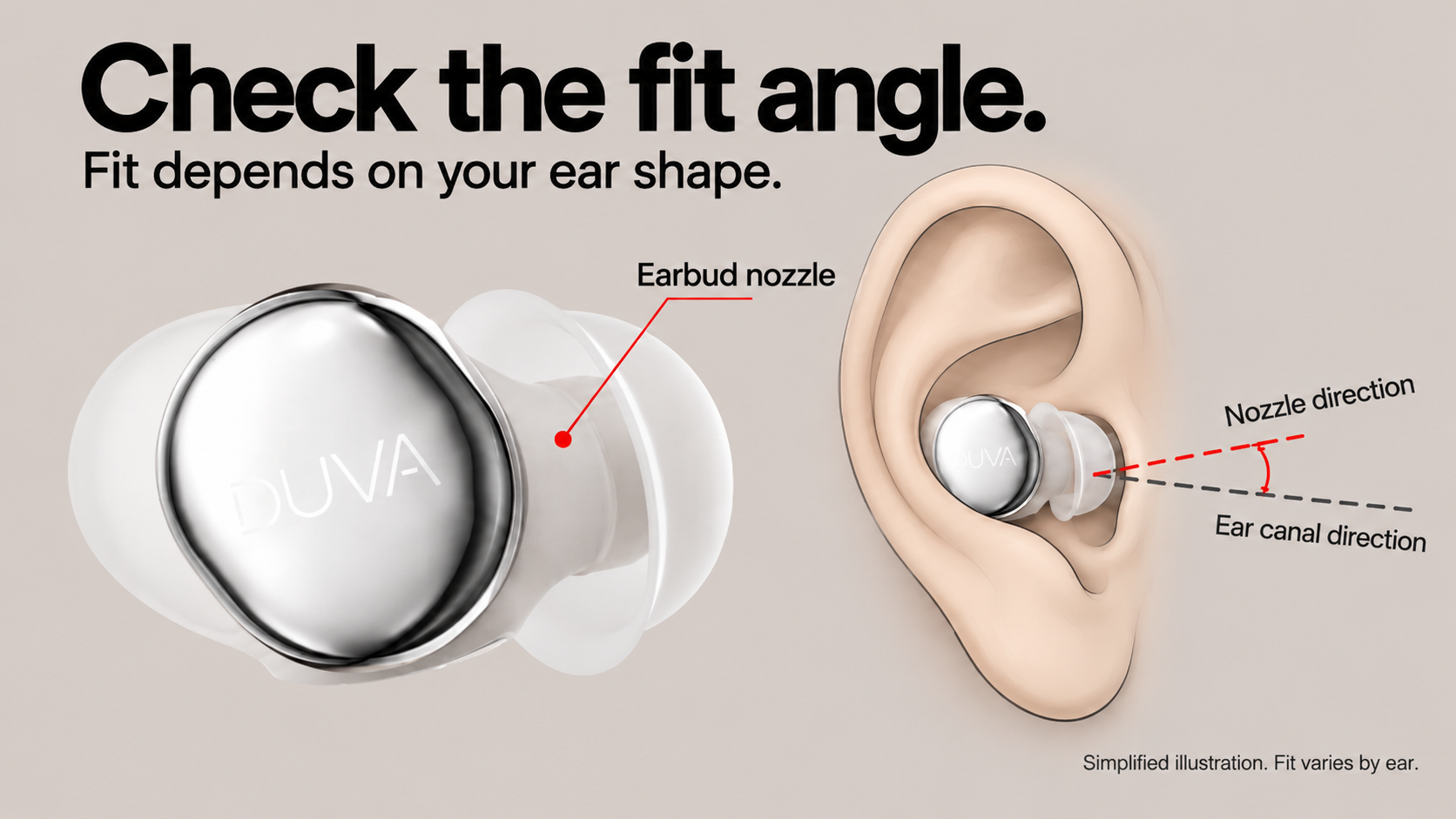
How Does Earbud Angle Affect Comfort? The angle of the part that enters your ear affects how the earbuds feel. They should fit naturally, without noticeable pressure. Pay particular attention to this when lying on your side.
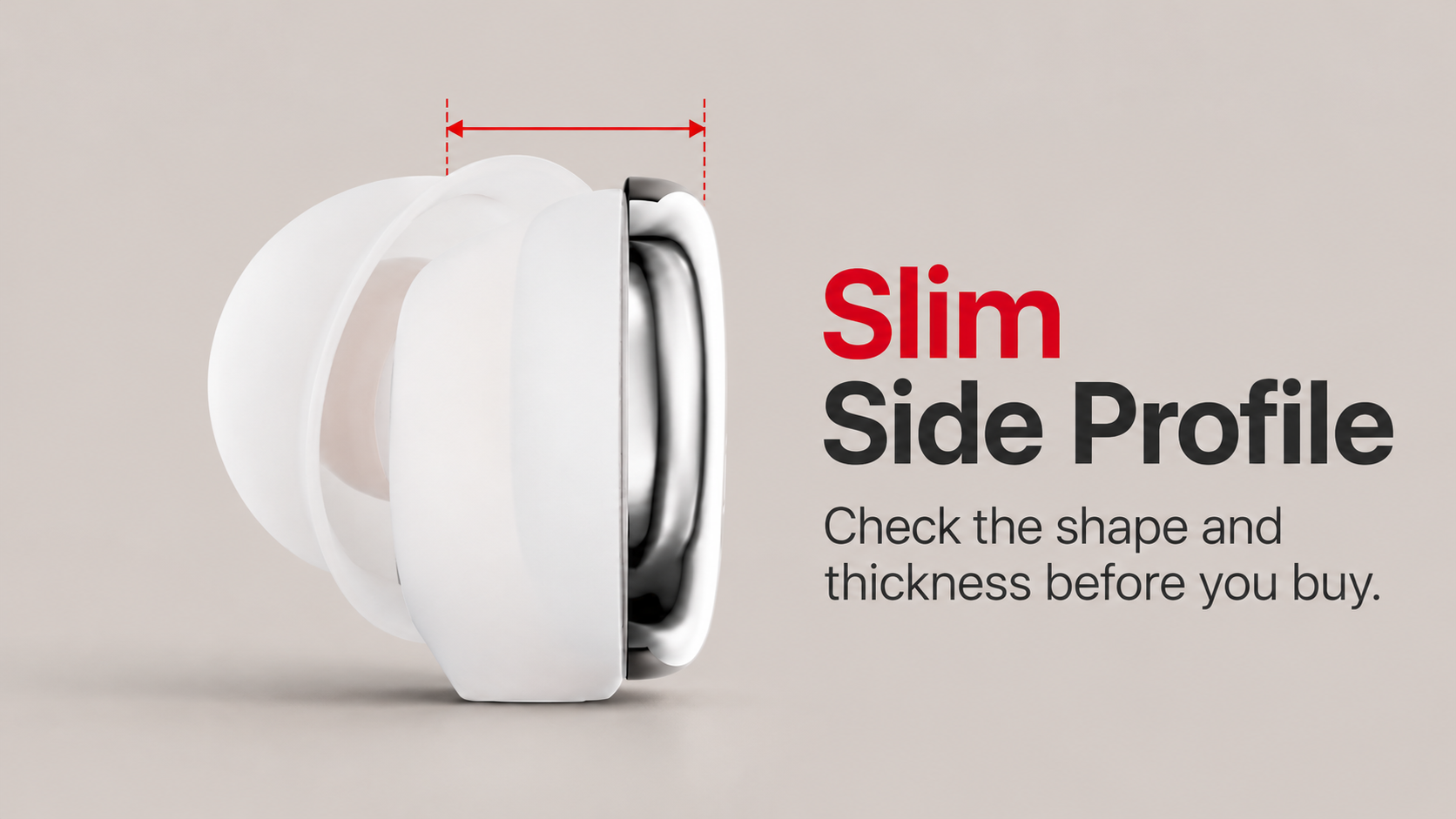
Are Thinner Earbuds Better for Side Sleepers? A product's stated thickness is not the same as how far it actually protrudes when worn. Check whether the housing sticks out noticeably and whether the pillow is likely to press against it when you lie on your side.
How Do You Know if Sleep Earbuds Will Fit Your Ears? Consider the size and material of the ear tips together with the contours of the housing. A lightweight, slim design and a suitable angle matter, but the earbuds also need to fit your ear shape to be more likely to feel comfortable.
2. How Do You Choose the Right Ear Tips and Wings?
Before buying, check whether the ear tips and wings come in multiple sizes, whether they can be replaced independently, and whether clear fitting instructions are provided. The right combination should balance stability when you roll over with comfort during extended wear.
Are Smaller Ear Tips and Wings Always Better? If the original wings are too small and do not provide enough support, moving up a size may provide a more secure fit, with better noise isolation and sealing as well. The ear tips need to fit your ear canals and form a good seal so that noise isolation and noise cancellation can work more effectively. Both should fit securely without noticeable pressure.
Can You Mix Ear Tip and Wing Sizes? You can choose ear tip and wing sizes separately—for example, small ear tips with larger wings. Your left and right ears do not necessarily need the same size, either. When trying them on, lie on your side and gently roll over to check for looseness, tightness, or pressure.
Can You Use Foam Ear Tips With Sleep Earbuds? Memory foam slowly expands after being compressed. With a proper fit, it may improve the seal and passive noise isolation. It is also drier than silicone ear tips, but check compatibility with your specific earbud model before buying.
3. Do You Need Noise-Canceling Earbuds for Sleeping?
When choosing sleep earbuds, first consider which sounds you mainly want to reduce and whether you are comfortable with audio playing continuously while you sleep. Passive noise isolation, active noise cancellation, and sound masking work in different ways.
Can Earbuds Block Noise Without Playing Audio? A physical barrier reduces the noise entering your ear canals without requiring power or audio playback. This is suitable for people who want to reduce disturbances without playing sound, and it is also the foundation for other noise-reduction methods. Its effectiveness depends largely on whether the ear tips form a good seal.
Can ANC Reduce Snoring and Other Bedroom Noise? Microphones pick up ambient noise, and the earbuds process it to produce corresponding opposite-phase sound waves that cancel out some of that noise. ANC is generally better at handling continuous, low-pitched sounds such as air conditioners and engines. Its effectiveness against complex sounds such as voices and snoring varies by product and situation. If you do not want to play audio, check whether the model allows ANC to operate on its own.
Can Noise Masking Help With Snoring? Masking requires audio playback, and its effectiveness also depends on the frequency and volume of the sound you choose. It cannot be guaranteed to cover all snoring.
How Do You Compare Noise Cancellation in Sleep Earbuds? The maximum noise-reduction figure in an advertisement may be a peak reached at a particular frequency under specific test conditions. It does not mean every sound will be reduced by that amount. When shopping, try to review noise-reduction curves or tests across different frequency ranges, focusing on whether the earbuds can effectively reduce the sounds that matter most to you.
4. Can Sleep Earbuds Last All Night?
When evaluating battery life, look beyond the advertised number of hours and check which usage settings those figures are based on. What matters is whether the earbuds can last through the night with the playback method and features you plan to use.
Does Advertised Battery Life Include the Charging Case? For sleep, focus on how long the earbuds can run continuously on a single full charge. Total battery life that includes the charging case requires taking the earbuds out to recharge them, so it is not the playback time you get from one uninterrupted wear session.
Do Sleep Earbuds Last Longer With Built-In Sounds? If you usually stream podcasts, audiobooks, or music from your phone, focus on continuous Bluetooth playback time. Some products last longer when playing sounds stored on the earbuds than when streaming over Bluetooth, but you still need to account for settings such as ANC and volume.
How Do ANC and Volume Affect Battery Life? On the same pair of earbuds, actual battery life can vary considerably depending on whether active noise cancellation is on or off and the volume you use. When shopping, try to compare results measured under settings close to your everyday use.
Can Sleep Timers and Auto-Switching Save Battery? Check whether the product can stop Bluetooth music on a timer, turn off ANC on a timer, or automatically switch to locally stored audio after you fall asleep. These settings may help extend battery life, but stopping the music does not mean ANC also turns off. Some advertised runtimes include stopping playback or switching modes partway through, so they should not be treated as continuous Bluetooth playback times.
Does Sleep Tracking Use More Battery? Sleep tracking may involve power-consuming processes such as maintaining a connection and collecting data. The actual impact depends on how the product implements it. If you plan to leave it on all night, check whether the battery-life test includes those features.
5. How Do You Clean and Maintain Sleep Earbuds?
Before buying, also check whether accessories are sold separately, whether replacements in your size are easy to find, and the long-term cost of replacing them. Sleep earbuds are often worn for several hours at a time, and the ear tips and wings come into contact with sweat, skin oils, and earwax. Especially when the inside of your ears is moist, clean them according to the instructions and let them dry thoroughly. Replace accessories promptly if they are damaged, misshapen, difficult to clean, or no longer fit as they originally did.
Sleep earbuds are small. If they fall out while you sleep, they may slip into gaps around your pillow or bedding and become difficult to find. When shopping, check whether there is a find-my-earbuds feature and whether it works by playing a sound nearby, showing the last connected location, or using another method.
6. Can You Turn Off Sleep Earbud Touch Controls and Alerts?
Check whether touch controls can be disabled or adjusted to prevent accidental activation when they touch your pillow. Also confirm whether low-battery, connection, and mode-switching alerts can be turned off or down, and whether timers and automatic switching suit the way you use the earbuds.
7. Can You Return Sleep Earbuds After Trying Them?
Before ordering, confirm whether returns or exchanges are allowed after opening the package and trying on the earbuds. Follow the terms published by the seller you actually buy from. Do not assume that "returns accepted" automatically means you can return them after trying them on.
8. Frequently Asked Questions About Sleep Earbuds for Side Sleepers
Why do my earbuds hurt when I sleep on my side?
When you lie on your side, the pillow may press against the earbud housing, creating pressure even if the earbuds felt comfortable while you were sitting up. Ear tip size, wearing angle, and the shape of the housing also affect comfort. When shopping, look at how far the earbuds actually protrude when worn. When trying them on, use your usual pillow to check where pressure occurs. A "lightweight and slim" description alone does not tell you whether they are right for you.
How can I keep sleep earbuds from falling out when I roll over at night?
First adjust the fit according to the product instructions, then try different ear tip and wing sizes. If the model allows it, you can choose the two sizes independently, and your left and right ears do not necessarily need the same size. Lie on your side and gently roll over to check whether the earbuds loosen or are pushed out of position by the pillow. A secure fit does not mean tighter is always better. Do not choose a size that noticeably stretches or presses against your ears just to keep the earbuds from falling out.
Can sleep earbuds block snoring without playing music or white noise?
They can reduce some of the snoring you hear, but they cannot guarantee complete isolation. Without audio playback, they mainly rely on passive isolation from the ear tips and active noise cancellation (ANC) that can operate independently. ANC works differently on different sounds, so "noise canceling" does not mean you will hear no snoring. Before buying, also distinguish between the two approaches: snore masking requires sound playback and is different from noise cancellation without audio.
Can sleep earbuds play podcasts all night with noise cancellation on?
It depends on the specific model and its settings. First confirm that the earbuds support Bluetooth audio from a phone. Then check whether single-charge battery life with Bluetooth playback and ANC both on covers your planned listening time, with some extra capacity to spare. Battery life for built-in sleep sounds, runtimes that include automatic mode switching, and total battery life including the charging case should not be treated as the time available for continuous podcast listening all night.
How can I stop my pillow from triggering my earbud controls?
Before buying, check whether the earbuds let you disable or customize touch and tap controls in the app. If you already own them, try disabling the controls that are easily triggered, then lie on your side to check. The available settings depend on the model. Also, turning off controls does not mean turning off alert sounds. Check separately whether low-battery, connection, and mode-switching alerts can be adjusted.