Which Supplements Are Best for Insomnia? The Science and Research Behind 7 Common Sleep Supplements
Insomnia can involve difficulty falling asleep, frequent nighttime awakenings, or waking too early in the morning, and different sleep problems involve different physiological mechanisms. Drawing on these mechanisms and human clinical research, this article examines the actual effects, potential uses, and risks of seven common sleep supplements to help you find an option better suited to your sleep concerns.

Lying in bed for a long time without falling asleep, waking repeatedly during the night, or suddenly waking up at 3 a.m. and being unable to fall back asleep. When sleep problems become a regular part of life, many people consider trying sleep supplements such as melatonin, magnesium, or GABA, hoping for a simple way to sleep better.
But different sleep problems may involve entirely different physiological mechanisms. For some people, the issue is their body clock. For others, it is an overactive mind before bed, high stress levels, or a body that has trouble settling into a state conducive to sleep. That means not every sleep supplement is suitable for every type of insomnia.
Sleep is influenced by several systems working together, including the body clock, neurotransmitters, the stress response, and body temperature regulation. Understanding these mechanisms helps explain why different supplements might work and which problems they can address.
What Kind of Sleep Problem Are You Experiencing?
Before choosing a sleep supplement, you first need to understand exactly what is going wrong with your sleep. Although all of these situations can make you feel that you have insomnia, they do not necessarily have the same underlying causes.
Trouble Falling Asleep: Your Body Is Tired, but Your Mind Won't Stop Racing
Some people feel exhausted but still cannot fall asleep after lying in bed for half an hour or even more than an hour. The day's activities, tomorrow's work schedule, or unresolved problems seem to keep coming to mind at bedtime.
Difficulty falling asleep generally involves two factors: the body clock has not yet reached a phase conducive to sleep, or the brain or body is still in a heightened state of arousal.
For example, if your body clock is accustomed to entering its sleep phase at 1 a.m., you may struggle to feel sleepy enough even if you go to bed at 10 p.m. Psychological stress and persistent thinking can also keep the brain alert, making it difficult for the body to transition from wakefulness to sleep.[1]
Although both situations involve difficulty falling asleep, they may call for different strategies.
Trouble Staying Asleep: You Keep Waking Up During the Night
Some people have no trouble falling asleep but wake up frequently afterward. Sometimes they can fall back asleep quickly; other times, it takes a long time.
This is commonly called difficulty maintaining sleep.
Staying asleep requires not only that the brain be able to enter sleep, but also that sleep remain relatively stable throughout the night. If the body stays in a heightened state of physiological arousal or is exposed to outside disturbances, awakenings may become more likely.
Psychological stress, environmental noise, bedroom temperature, alcohol use, nighttime urination, and pain can all affect sleep at night. Conditions such as sleep apnea can also cause repeated awakenings.
Waking Too Early: You Wake Up at 3 or 4 a.m. and Cannot Get Back to Sleep
Other people fall asleep normally and do not have noticeable repeated awakenings during the night, yet consistently wake up at 3 or 4 a.m. Even though they still feel tired, they struggle to fall back asleep.
Waking too early is a common symptom of insomnia, but it can have different causes.
Normally, sleep is regulated by circadian rhythms. As morning approaches, the body gradually increases signals that promote wakefulness. If someone's body clock is shifted significantly earlier, they may become sleepy earlier and naturally wake up earlier. However, early waking may also be related to psychological stress, emotional issues, sleep scheduling, or other physical factors.
Irregular Sleep Timing: You Cannot Sleep When You Want To but Feel Sleepy When You Shouldn't
Some people have trouble sleeping mainly at specific times. After traveling across time zones, for example, they may be unable to fall asleep at night but feel very sleepy during the day. Or shift work and a long-standing irregular schedule may make it difficult for the body to adapt to consistent sleep times.
The body's internal clock needs to stay relatively aligned with the external day-night cycle. When sleep timing is out of sync with internal rhythms, it can be difficult to fall asleep at the intended time, even when you are already tired.[2]
For these problems, adjusting light exposure and sleep timing, along with appropriate use of melatonin in certain situations, is a more targeted approach than simply taking supplements for relaxation.
Seven Common Sleep Supplements: What Has Scientific Research Actually Found?
Melatonin: Better Suited to Body Clock Disruptions and Some Cases of Difficulty Falling Asleep
Why might melatonin help with sleep?
Melatonin is a hormone secreted by the pineal gland primarily at night. One of its most important functions is to communicate information about day and night to the body.
Melatonin can act on MT1 and MT2 receptors in the brain. MT1 receptors help regulate neural activity in the circadian system, while MT2 receptors are closely involved in shifting the phase of the body clock.
Unlike conventional sleeping pills, melatonin does not produce sedation primarily by broadly suppressing the central nervous system. It acts more like a timing signal, helping the body recognize when to enter its biological night. This also explains why melatonin has clear research relevance for jet lag and certain delayed sleep phase problems.
Who might it be better suited for?
If your sleep problems stem mainly from jet lag, significantly delayed sleep timing, or certain circadian rhythm issues, melatonin may be more worth considering.[3]
But its effects depend heavily on when you take it. Taking it at the wrong time may actually shift your body clock in the wrong direction.[2]
GABA: The Brain Needs It, but Do Oral Supplements Actually Work?
How is GABA related to sleep?
GABA, short for gamma-aminobutyric acid, is the main inhibitory neurotransmitter in the human brain. It regulates neuronal activity through two main types of receptors: GABA-A and GABA-B. GABA-A receptors produce relatively fast inhibitory effects primarily through ion channels, while GABA-B receptors produce relatively slower regulatory effects through G protein-related signaling.
These inhibitory neural signals help control the brain's level of excitation and play an important role in transitions between sleep and wakefulness. From a physiological perspective, GABA is indeed closely linked to sleep.
But there is an important distinction here: the fact that GABA in the brain can regulate sleep does not mean that GABA taken orally will have the same effect.[4]
Can oral GABA reach the brain?
The brain is protected by the blood-brain barrier, which selectively limits the passage of substances from the blood into brain tissue. GABA molecules are highly polar, which limits their ability to cross this barrier. So even if blood GABA levels rise after taking it orally, that does not establish that GABA concentrations in the brain rise along with them.[4]
Who might it be better suited for?
GABA is often marketed as a supplement to promote relaxation and ease tension before bed.
5-HTP: A Precursor to Serotonin and Melatonin, but Drug Interactions Require Caution
Why might 5-HTP affect sleep?
5-HTP, short for 5-hydroxytryptophan, is an intermediate substance in the body's synthesis of serotonin.[5]
The biosynthetic pathway it participates in can be simplified as follows:
Tryptophan → 5-HTP → Serotonin → Melatonin
Unlike serotonin itself, 5-HTP can cross the blood-brain barrier and participate in serotonin synthesis in the brain.[5] Serotonin is a neurotransmitter involved in mood, arousal, and many physiological regulatory processes. It is also a precursor to melatonin. This has led researchers to explore whether 5-HTP might influence sleep by affecting serotonin-related pathways.
What are the risks of 5-HTP?
Compared with some other sleep supplements, 5-HTP requires particular attention to drug interactions.
Because it participates in serotonin synthesis, taking it alongside medications that affect the serotonin system may cause excessive serotonin-related effects.[5]
For example, certain medications used to treat depression, including SSRIs, SNRIs, and MAOIs, may increase the risk of serotonin syndrome when combined with 5-HTP. Serotonin syndrome is a potentially serious adverse reaction that can cause symptoms such as agitation, an abnormally high body temperature, a rapid heart rate, and muscle rigidity.
Who might it be better suited for?
Although 5-HTP has a plausible physiological rationale and some preliminary human research, there is not yet enough evidence to identify which group of people with insomnia can consistently benefit from it. Given its potential drug interactions, it is not a sleep supplement to try casually.
Ashwagandha: Improving Sleep by Regulating the Stress Response
Why might ashwagandha help with sleep?
Ashwagandha is a plant studied for stress, anxiety, and sleep problems. One important area of research involves the HPA axis, or hypothalamic-pituitary-adrenal axis.
When the body experiences stress, this system helps coordinate the stress response, including regulating cortisol release.
Normally, cortisol follows a circadian rhythm, typically beginning to rise as morning approaches and staying relatively low at night. However, chronic stress and hyperarousal can interfere with the normal sleep process, making it difficult to calm down when it is time to rest.
Some ashwagandha extracts may influence stress-related physiological regulation, lowering perceived stress levels and cortisol measures and thereby indirectly improving sleep.
Who might it be better suited for?
If your sleep difficulties are related to chronic psychological stress, ashwagandha may be an area of research worth learning about. It also carries some safety risks. Rare cases of liver injury have been reported, and some studies suggest it may affect thyroid function and interact with certain medications. It is not recommended during pregnancy or breastfeeding.[7]
L-Theanine: May Help the Mind Relax Before Bed
Why might theanine help with sleep?
L-theanine is an amino acid naturally found in tea leaves.[8]
Unlike caffeine, it has drawn researchers' attention mainly because it may help regulate stress and relaxation.
Theanine shares some similarities in molecular structure with glutamate. Preclinical research suggests it may affect certain glutamate-related receptors and neural signaling pathways, helping regulate neural excitability.[8]
Another frequently discussed mechanism is its relationship with alpha brain wave activity.
Alpha waves typically occur when you are awake but relatively relaxed, such as when resting with your eyes closed and your attention calm, without having fallen asleep. Some human EEG studies have found that theanine can increase alpha-band brain wave activity under specific experimental conditions.[8] This may help explain why theanine is often thought to have relaxing effects.
For people who already feel exhausted during the day but keep thinking about work or life problems at night, hyperarousal before bed may be an important reason they struggle to fall asleep.
If theanine can reduce stress-related arousal to some degree, it may indirectly create conditions that are more conducive to sleep.
Who might it be better suited for?
If you have trouble falling asleep mainly when you are under considerable psychological stress and feel persistently tense, theanine may be worth learning about.
Glycine: May Help with Sleep by Regulating Heat Loss and Core Body Temperature
Why might glycine help with sleep?
Glycine is an amino acid involved in many physiological processes, including protein synthesis and neurotransmitter regulation.
One particularly interesting connection between glycine and sleep involves body temperature regulation.
Many people think falling asleep is simply a process of the brain gradually quieting down. In fact, the body also undergoes a series of temperature changes before sleep begins.
Normally, as bedtime approaches, the body adjusts peripheral blood vessels to allow more heat to escape through the skin. Changes in blood flow to areas such as the hands and feet help the body release heat and promote a drop in core body temperature.
A gradual decline in core body temperature is closely associated with normal sleep onset.
Researchers have found that glycine may facilitate this process by influencing temperature-regulating pathways in the central nervous system. A 2015 animal study found that glycine could promote peripheral blood vessel dilation, increase heat loss, and lower core body temperature through mechanisms involving NMDA receptors in the suprachiasmatic nucleus.[9]
The researchers also observed an increase in non-rapid eye movement sleep.[9]
This offers a physiologically plausible explanation:
Glycine participates in neural regulation → Peripheral blood vessels dilate → Heat loss through the skin increases → Core body temperature drops → Sleep onset may be facilitated.
Who might it be better suited for?
For people who perceive their sleep quality as poor, glycine is a promising area of research, particularly because of its connection with body temperature regulation.
Magnesium: A Deficiency May Affect Sleep, but Extra Supplementation May Not Help
How is magnesium related to sleep?
Magnesium is an essential mineral involved in hundreds of biochemical reactions, including energy metabolism, muscle function, and neural signaling regulation.[10]
In the nervous system, magnesium helps regulate neuronal excitability.
One important mechanism involves NMDA receptors. These are a type of glutamate receptor involved in excitatory neural signaling. Under normal physiological conditions, magnesium ions can block NMDA receptor channels in a voltage-dependent manner, helping regulate the associated neural activity.
Magnesium also helps regulate other neural signaling processes and neuromuscular function.
A significant magnesium deficiency can affect normal neuromuscular function. Severe cases may cause symptoms such as muscle cramps and convulsions.[10] These changes may indirectly disrupt normal sleep.
So, from a physiological perspective, magnesium is indeed connected to sleep. But if the body already gets enough magnesium, increasing supplementation may not provide any additional sleep benefits.
Who might it be better suited for?
If your dietary magnesium intake is inadequate or you suspect a magnesium deficiency, appropriately assessing your nutritional status and correcting a shortfall has clear nutritional health value. A more accurate conclusion is that magnesium is very important for normal nerve function, but there is still insufficient evidence that taking extra magnesium can treat insomnia.[10][11]
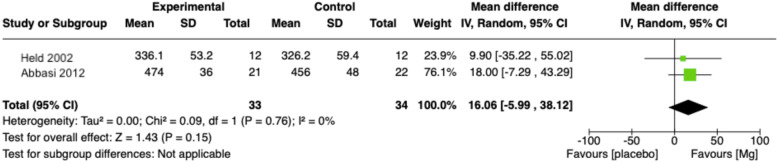
Figure 1 | Total sleep time with magnesium supplementation versus placebo in older adults: the confidence interval for the pooled effect crosses the line of no effect.
Source: Mah and Pitre (2021), Figure 6 [11].
How Do You Choose a Supplement Based on Your Sleep Problem?
Once you understand how different sleep supplements work, the next important question is: which one should you choose? Rather than buying several sleep products at once, first identify your main sleep problem.
If You Have Trouble Falling Asleep: First Determine Whether the Issue Is Your Body Clock or an Overactive Mind
Scenario A: You don't feel sleepy until very late every night, and you also struggle to get up in the morning.
This may be related to a delayed sleep phase. Your body is not completely unable to fall asleep; rather, your internal clock sets your sleep time later than your daily schedule allows.
Consider first: melatonin.
If a delayed circadian rhythm is confirmed, taking melatonin at the right time may help your body gradually shift sleep to an earlier time.[3]
Scenario B: You already feel very sleepy, but your mind keeps going once you lie down.
If your sleep schedule is relatively regular but your main problem is trouble relaxing before bed, stress-related cognitive and physiological arousal may deserve more attention than your body clock.
An option to learn about first: L-theanine.
Theanine may help reduce some arousal by regulating glutamate-related signaling and the stress response.
If You Often Wake Up During the Night and Feel You Aren't Sleeping Deeply: First Find Out What Is Interrupting Your Sleep
Frequent nighttime awakenings are not the same as difficulty falling asleep. Some people wake because of environmental noise, temperature, or physical discomfort, while others have sleep disrupted by stress and hyperarousal.
Scenario A: You wake up easily during the night and feel in the morning that you slept poorly.
You can look into glycine. It is worth attention because it may play a role in peripheral heat loss and core body temperature regulation. During normal sleep onset, the body needs to regulate heat loss through peripheral blood vessels, and animal research suggests glycine may facilitate this process. In a small human trial, researchers had participants take 3 g of glycine before bed and observed improvements in some subjective sleep quality measures, along with shorter times to sleep onset and the first episode of slow-wave sleep.[12]
Scenario B: You are under a lot of stress during the day, and at night you not only struggle to fall asleep but also wake up easily.
In this situation, you can look into theanine and ashwagandha, which is being studied.
Some human trials of ashwagandha have found improvements in participants' stress and sleep-related measures after several weeks of intervention.[6] This may involve regulation of the HPA axis and cortisol.
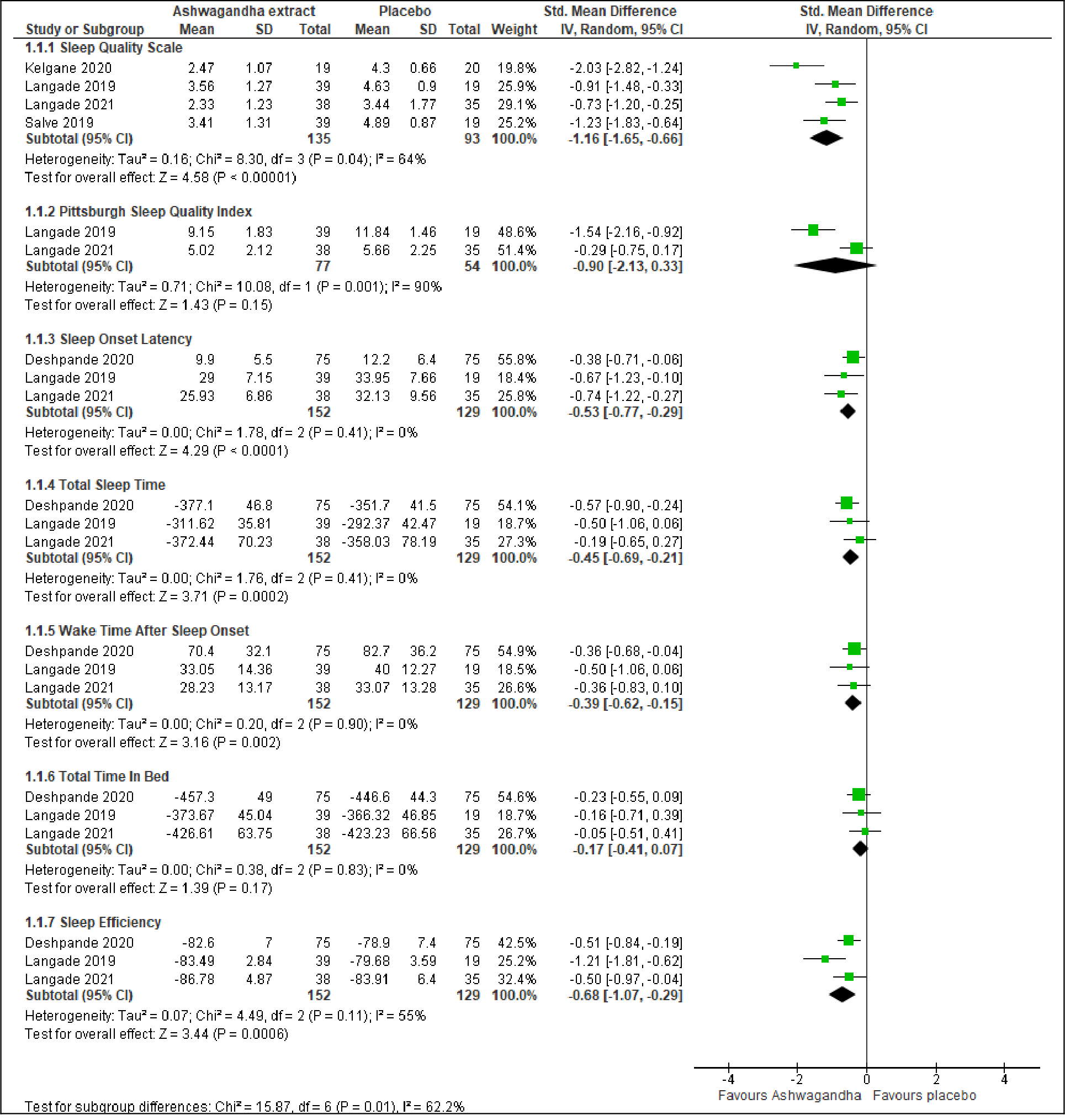
Figure 2 | Different sleep outcomes with ashwagandha versus placebo: forest plots from a systematic review.
Source: Cheah et al. (2021), Figure 3 [6].
If You Always Wake Up at 3 or 4 a.m.: Don't Rush to Take Melatonin
Early waking may involve your body clock, stress, emotional state, and other sleep problems.
Step 1: Check when and how long you actually sleep.
If you fall asleep at 8 or 9 p.m. and wake naturally at 4 a.m., first determine whether you have already had enough sleep and whether your sleep phase is earlier than you would like. People whose body clocks run early may need to adjust their overall light exposure and sleep schedule.
Step 2: If you clearly aren't getting enough sleep, look for the cause of early waking.
For example, waking at 3 a.m. and then starting to worry about work may involve stress and insomnia-related cognitive arousal.
Step 3: Do not take an additional dose of melatonin on your own after waking in the early morning.
Melatonin primarily affects circadian rhythms, and taking it at different times may shift the body clock in different ways. Taking it in the early morning may also cause problems such as next-day drowsiness.
If Your Sleep Schedule Is Irregular: Prioritize Adjusting Your Body Clock
If your sleep problems mainly occur after traveling across time zones, working shifts, or repeatedly changing your sleep times, circadian rhythms often deserve more attention than sedation.
Consider first: taking melatonin at the right time while also managing light exposure.
If You Suspect a Magnesium Deficiency: Check Your Diet Before Adding Supplements
Magnesium is essential for normal nervous system function, but not everyone who sleeps poorly needs extra magnesium.
If you rarely eat leafy greens, legumes, nuts, and whole grains, start by checking whether your daily magnesium intake is adequate.[10]
The recommended magnesium intake for adults varies by age and sex and is generally about 310–420 mg per day. This includes magnesium from both food and supplements; it is not a recommendation to take that much extra magnesium each day.[10]
If You Decide to Try a Supplement, How Can You Tell Whether It Is Working?
Whichever supplement you choose, it is a good idea to start with a simple sleep log. Recording when you fall asleep, nighttime awakenings, your final getting-up time, and how alert you feel the next day for one to two weeks can help establish your baseline sleep patterns.[13]
Rather than judging whether you slept better on a single night, compare your sleep over a period of time under similar conditions. For example, people who have trouble falling asleep can track whether it takes less time to do so. Those who wake easily at night can record how often they wake and how easy or difficult it is to fall back asleep. People who wake too early should focus on their final wake-up time and actual total sleep duration.
Frequently Asked Questions (FAQ)
Which Supplement Should I Choose if I Have Trouble Falling Asleep?
First determine whether you don't feel sleepy or feel sleepy but cannot relax. If you consistently don't become naturally sleepy until the early morning and have trouble getting up, your body clock may be delayed. Melatonin may be more worth considering, but timing matters. If you already feel very sleepy but cannot fall asleep because of stress and racing thoughts, you can first try relaxation exercises before bed. Theanine is a supplement option with preliminary research support.
How Long Before Bed Should I Take Melatonin? Is a Higher Dose Better?
When to take melatonin depends on the problem you want to address, and a higher dose is not necessarily more effective. For jet lag or body clock adjustment, timing should be based on your individual circadian rhythm and the direction it needs to shift, rather than a blanket rule of 30 minutes before bed. The CDC notes that 0.5–1 mg of melatonin is usually enough to produce a circadian phase shift, and higher doses do not necessarily produce better adjustments.[2]
Can I Take a Melatonin Pill if I Wake Up in the Early Morning and Cannot Get Back to Sleep?
Taking an additional dose of melatonin on your own after waking in the early morning is not recommended. It may not help you fall back asleep and could affect your body clock or cause next-day drowsiness. If you have been awake for a long time and cannot get back to sleep, you can get out of bed temporarily and read or listen to soothing audio in dim light, returning to bed when you feel sleepy again. Don't keep checking the time or use your phone to deal with work. If you often wake too early at a consistent time, take a closer look at your sleep schedule and possible underlying causes.
I Wake Up Several Times Every Night. Can Glycine Help?
Glycine may improve some subjective measures of sleep quality, but it has not been shown to consistently reduce nighttime awakenings or increase deep sleep. If you often wake during the night, first check factors such as bedroom noise, temperature, alcohol use before bed, nighttime urination, and physical discomfort. If you also have pronounced snoring, wake up gasping, or experience severe daytime sleepiness, prioritize being evaluated for sleep apnea. Don't assume glycine is a solution for increasing deep sleep simply because you feel you are “sleeping lightly.”
If I'm Stressed and My Mind Won't Stop Racing, Should I Choose Theanine or Ashwagandha?
If your main issue is feeling mentally tense before bed, you can start by learning about theanine, which has some research evidence for improving subjective sleep quality. If you have chronic stress along with declining sleep quality, you can also look into research on ashwagandha.
How Can I Tell Whether I Need Magnesium? Is Magnesium Glycinate Better for Sleep?
First check whether your daily diet includes enough sources of magnesium. Leafy greens, legumes, nuts, and whole grains all contain magnesium. If your diet has been unbalanced for a long time, or you have a condition that affects nutrient absorption, ask your doctor whether your magnesium status should be evaluated. Magnesium glycinate is a common supplemental form.
Are GABA and 5-HTP Worth Trying?
These two supplements are not recommended as first choices for insomnia. There is insufficient evidence for the sleep benefits of oral GABA. Just because GABA is an important inhibitory neurotransmitter in the brain does not mean that taking it as a supplement will necessarily make it easier to fall asleep.[4] Although 5-HTP participates in serotonin synthesis, clinical evidence for its sleep benefits is also limited. If you take antidepressants or other medications that affect serotonin, do not use 5-HTP on your own, because serious drug interactions may occur.[5]
Can I Take Melatonin, Theanine, and Magnesium Together?
Combining multiple supplements on your own in pursuit of stronger sleep benefits is not recommended. There is currently insufficient evidence that combining these ingredients is necessarily more effective than using them individually, and different supplements may interact with medications you already take. If you do need to try them, first consult a doctor or pharmacist to review the ingredients, doses, and potential risks. Starting several new supplements at the same time also makes it difficult to tell which ingredient is responsible if side effects or changes in sleep occur.
How Long Should I Take a Sleep Supplement Before Judging Its Effects? When Should I See a Doctor?
Study durations vary across supplements, and there is no single trial period that applies to all supplements. Start by recording one to two weeks of baseline sleep, including when you fall asleep, the number of nighttime awakenings, total sleep duration, and how alert you feel the next day. If you try a supplement after a professional has confirmed that it is safe, compare changes over a monitoring period established in advance. If there is no clear benefit, do not increase the dose on your own. If adverse effects occur, stop taking it promptly and seek advice.
Final Thoughts: What Really Matters Is Finding Out What Is Affecting Your Sleep
Different sleep supplements affect sleep through different physiological mechanisms, so choosing one starts with identifying your sleep problem. Melatonin is better suited to some body clock disruptions and cases of difficulty falling asleep. Theanine and ashwagandha may help improve stress-related sleep problems, while the sleep benefits of glycine, GABA, 5-HTP, and magnesium still need further research. No single supplement is suitable for every case of insomnia. Finding the root cause of your sleep problem allows you to choose a more targeted way to improve it. For long-term insomnia, supplements cannot replace professional evaluation and effective treatment.[14]
References
- [1] NHLBI. Insomnia — Causes and Risk Factors. NIH. 2022.
- [2] CDC. Jet Lag Disorder. CDC Yellow Book. 2025.
- [3] NCCIH. Melatonin: What You Need To Know. NIH. 2022.
- [4] Hepsomali P, Groeger JA, Nishihira J, Scholey A. Effects of Oral Gamma-Aminobutyric Acid (GABA) Administration on Stress and Sleep in Humans: A Systematic Review. Frontiers in Neuroscience. 2020;14:923. doi:10.3389/fnins.2020.00923.
- [5] Memorial Sloan Kettering Cancer Center. 5-HTP. 2025.
- [6] Cheah KL, Norhayati MN, Husniati Yaacob L, Abdul Rahman R. Effect of Ashwagandha (Withania somnifera) extract on sleep: A systematic review and meta-analysis. PLOS ONE. 2021;16(9):e0257843. doi:10.1371/journal.pone.0257843. Figure 3 reproduced unmodified under CC BY.
- [7] NCCIH. Ashwagandha: Usefulness and Safety. NIH. Year not specified.
- [8] Hidese S, et al. Effects of L-Theanine Administration on Stress-Related Symptoms and Cognitive Functions in Healthy Adults: A Randomized Controlled Trial. Nutrients. 2019;11(10):2362. doi:10.3390/nu11102362.
- [9] Kawai N, et al. The Sleep-Promoting and Hypothermic Effects of Glycine are Mediated by NMDA Receptors in the Suprachiasmatic Nucleus. Neuropsychopharmacology. 2015;40:1405–1416. doi:10.1038/npp.2014.326.
- [10] MedlinePlus. Magnesium in diet. Medical Encyclopedia. 2025.
- [11] Mah J, Pitre T. Oral magnesium supplementation for insomnia in older adults: a Systematic Review & Meta-Analysis. BMC Complementary Medicine and Therapies. 2021;21:125. doi:10.1186/s12906-021-03297-z. Figure 6 reproduced unmodified under CC BY 4.0.
- [12] Bannai M, Kawai N. New Therapeutic Strategy for Amino Acid Medicine: Glycine Improves the Quality of Sleep. Journal of Pharmacological Sciences. 2012;118(2):145–148. doi:10.1254/jphs.11R04FM.
- [13] NHLBI. Insomnia — Diagnosis. NIH. 2022.
- [14] NHLBI. Insomnia — Treatment. NIH. 2022.