


Why Can't I Sleep After Working Out Even Though I'm Tired?
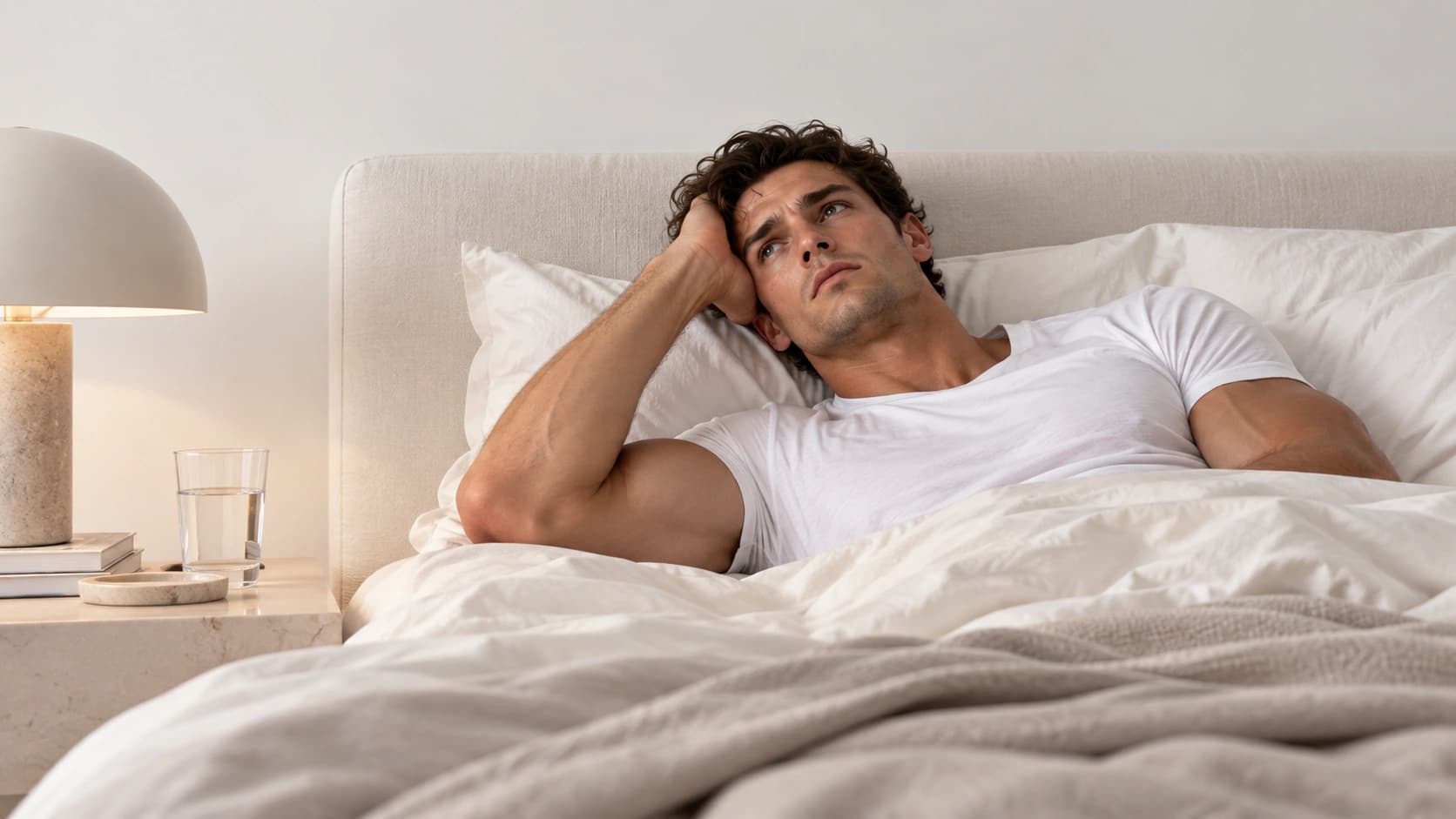
Has this ever happened to you? You have just finished a high-intensity workout and your body feels exhausted, yet once you get into bed, you are wide awake and cannot fall asleep.
For people who work out regularly, this may mean more than losing a few hours of sleep. It may also affect post-workout recovery and muscle growth. That is because strength training only provides the stimulus for muscle growth; your body still needs nutrition and rest to repair your muscles and help them gradually become stronger.[1]
Why Can't I Sleep After Working Out?
Your Body Is Still Activated After Exercise
During exercise, your body activates the sympathetic nervous system and releases hormones such as adrenaline. These responses increase your heart rate and deepen your breathing, helping your muscles receive more oxygen and energy so you can perform well during your workout.
The problem is that finishing a workout does not mean your body immediately settles down. Especially after high-intensity exercise, it may take time for your heart rate and nervous system arousal to subside. Even when your muscles are tired, your body may still be relatively alert, making it difficult to fall asleep quickly.[2]
Exercise Raises Your Body Temperature
During exercise, your muscles generate a substantial amount of heat, raising your core body temperature. Research has found that people typically fall asleep as core body temperature gradually declines, while a core temperature that remains elevated near bedtime may delay sleep onset.[3] If you go to bed right after a high-intensity workout, your body may not have had enough time to release that heat. Continuing to feel warm can make it harder to feel sleepy.
The Caffeine You Had Before Your Workout Is Still Working
Many people drink coffee, energy drinks, or take pre-workout supplements to improve their workout performance. However, caffeine's stimulating effects can last for hours after the workout ends. This is because a substance in the brain called adenosine gradually builds up while you are awake, making you feel sleepy. Caffeine blocks the receptors that adenosine acts on, temporarily making your brain feel less sleepy.[4]
How Can Insufficient Sleep Affect Recovery and Training?
Changes in muscle protein synthesis: Your body uses dietary protein to repair muscle and make new muscle proteins. In a 2020 study of healthy young men, the group assigned four hours in bed per night for five nights had muscle protein synthesis rates about 19% lower than the group assigned eight hours. A third group, which combined the same sleep restriction with three high-intensity interval exercise sessions, maintained rates comparable to the normal-sleep group.[5]
Changes in the hormonal environment: In a small study of 13 young adults, one night of total sleep deprivation was followed by lower muscle protein synthesis, higher cortisol, and lower testosterone compared with a normal night of sleep.[6]
Less effective subsequent workouts: Sleep is also an important time for nervous system recovery. Insufficient sleep increases fatigue and may affect your ability to coordinate movements and sustain muscular effort.[7] For example, if you can normally complete 4 sets of squats, you might feel exhausted after just 3 sets following a poor night's sleep. If you consistently cannot maintain enough training volume, your muscles may receive less stimulus for growth.
How Should You Schedule Evening Workouts to Avoid Sleep Problems?
Different types of exercise place different demands on your heart rate, body temperature, and nervous system. In general, the higher the intensity, the more time your body needs to settle down. If you often work out in the evening, you can use the following schedule as a reference:
High-intensity interval training (HIIT) and sprints: Aim to finish at least 4 hours before bed.[2] During the high-intensity intervals, heart rate can typically reach 80%–95% of maximum heart rate. This type of exercise significantly raises your heart rate and core body temperature, and your body may need longer to return to a state that is conducive to sleep.
Weight training: Aim to finish 2–4 hours before bed. You can schedule moderate-intensity strength training more flexibly based on how you sleep. However, if you are doing heavy squats or deadlifts, or often training to failure, it is best to allow closer to 4 hours for recovery.
Moderate cardio: Try finishing 1–2 hours before bed. Examples include brisk walking, easy cycling, or jogging at an appropriate intensity, with heart rate typically around 50%–70% of maximum heart rate. If your heart rate returns toward normal relatively quickly after exercise, you generally do not need to finish as far in advance as you would with high-intensity training.
Light exercise: This can usually be done before bed. Examples include gentle stretching, relaxing yoga, or a slow walk. These activities have a smaller effect on heart rate and body temperature, so there is generally no need to finish them several hours beforehand.
What Should You Do Before Bed to Sleep Better After a Workout?
Give your body enough time to wind down: After training, start with 5–10 minutes of slow walking or gentle stretching to let your heart rate and breathing gradually settle. Once home, you can take a warm shower and reduce exposure to bright light, your phone, and other stimulation before bed to help your body transition from exercise to rest.
Keep your sleep environment comfortable: Your body may still be releasing heat after exercise, so keep your bedroom comfortably cool and reduce light and noise disturbances.[8] If you are not sure whether your bedroom environment is suitable, the smart charging case for DUVA ONE can sense temperature, humidity, light, and noise, helping you understand environmental factors that may affect your sleep.

Finally, exercise and sleep are not an either-or choice. Regular exercise generally supports healthy sleep, but if your workouts frequently make it difficult to fall asleep, it is worth adjusting their timing, intensity, and your bedtime habits. An effective fitness plan considers not only how much you trained today, but also whether your body has had enough recovery.
Frequently Asked Questions
Can I Go to Bed Right After Working Out?
You can go to bed after exercise, but you need to consider the intensity. If you only went for a walk or did some gentle stretching, you generally do not need to wait very long. But if you just finished HIIT or high-intensity strength training, your heart rate and core body temperature may still be elevated. Give your body time to wind down and release heat before getting ready for sleep.
Does Working Out at Night Affect Deep Sleep?
Not necessarily. Research has found that typical evening exercise does not usually significantly reduce deep sleep, and some studies have even observed a slight increase.[9] However, high-intensity training close to bedtime may make it harder to fall asleep because heart rate and body temperature remain elevated. The effects vary from person to person.
What If I Can Only Work Out Late at Night?
You do not need to give up evening workouts altogether. Try lowering the intensity, avoiding caffeinated pre-workout supplements in the evening, and allowing enough time to wind down afterward. If you often struggle to fall asleep after training, try shortening your workouts or adjusting your training plan.
Is Taking a Warm Shower After Working Out Good for Sleep?
It may help. A warm shower can dilate blood vessels in the skin, making it easier for your body to release heat afterward and allowing core body temperature to gradually decline. Research has found that taking a warm shower about 1–2 hours before bed may shorten the time it takes to fall asleep.[3] However, the water should not be too hot, and you do not need to shower for too long, to avoid placing additional strain on your body.
References
[1] Snijders T, Trommelen J, Kouw IWK, Holwerda AM, Verdijk LB, van Loon LJC. The Impact of Pre-sleep Protein Ingestion on the Skeletal Muscle Adaptive Response to Exercise in Humans: An Update. 2019. Frontiers in Nutrition, 6:17. DOI: 10.3389/fnut.2019.00017.
[2] Leota J, Presby DM, Le F, et al. Dose-response relationship between evening exercise and sleep. 2025. Nature Communications, 16:3297. DOI: 10.1038/s41467-025-58271-x.
[3] Maeda T, Koga H, Nonaka T, Higuchi S. Effects of bathing-induced changes in body temperature on sleep. 2023. Journal of Physiological Anthropology, 42:20. DOI: 10.1186/s40101-023-00337-0.
[4] Fountain L; medically reviewed by Cotliar D. Caffeine and Sleep. 2025 (updated: 2025-07-16). Sleep Foundation.
[5] Saner NJ, Lee MJ, Pitchford NW, et al. The effect of sleep restriction, with or without high-intensity interval exercise, on myofibrillar protein synthesis in healthy young men. 2020. The Journal of Physiology, 598(8):1523–1536. DOI: 10.1113/JP278828.
[6] Lamon S, Morabito A, Arentson-Lantz E, et al. The effect of acute sleep deprivation on skeletal muscle protein synthesis and the hormonal environment. 2021. Physiological Reports, 9(1):e14660. DOI: 10.14814/phy2.14660.
[7] Craven J, McCartney D, Desbrow B, et al. Effects of Acute Sleep Loss on Physical Performance: A Systematic and Meta-Analytical Review. 2022. Sports Medicine, 52:2669–2690. DOI: 10.1007/s40279-022-01706-y.
[8] National Health Service (NHS). Insomnia. 2024 (page reviewed: 2024-03-19). NHS.
[9] Stutz J, Eiholzer R, Spengler CM. Effects of Evening Exercise on Sleep in Healthy Participants: A Systematic Review and Meta-Analysis. 2019. Sports Medicine, 49:269–287. DOI: 10.1007/s40279-018-1015-0.