Is It Bad to Sleep with Earbuds In? Bluetooth Radiation and Brain Health

During the day, you might wear wireless earbuds to listen to a podcast, take a walk, or join a work meeting without giving radiation much thought.
Then you turn out the lights and get ready to wear them until morning. Suddenly, the same earbuds feel different: “They’re right next to my brain, and I’ll be wearing them for hours. Is that really okay?”
Bluetooth sleep earbuds do emit radio waves, but the presence of radiation does not automatically mean harm. Australia’s radiation protection agency, ARPANSA, says there is no substantiated evidence that radiofrequency exposure from wearable devices such as Bluetooth earphones harms health during normal use. [1]
If you’re wondering, “Does Bluetooth radiation make sleeping with earbuds harmful?”, it helps to start with the wireless devices you already use every day. This article focuses on that concern about radiation.
What Radiation Do Bluetooth Earbuds Emit? How Wireless Signals Carry Sound
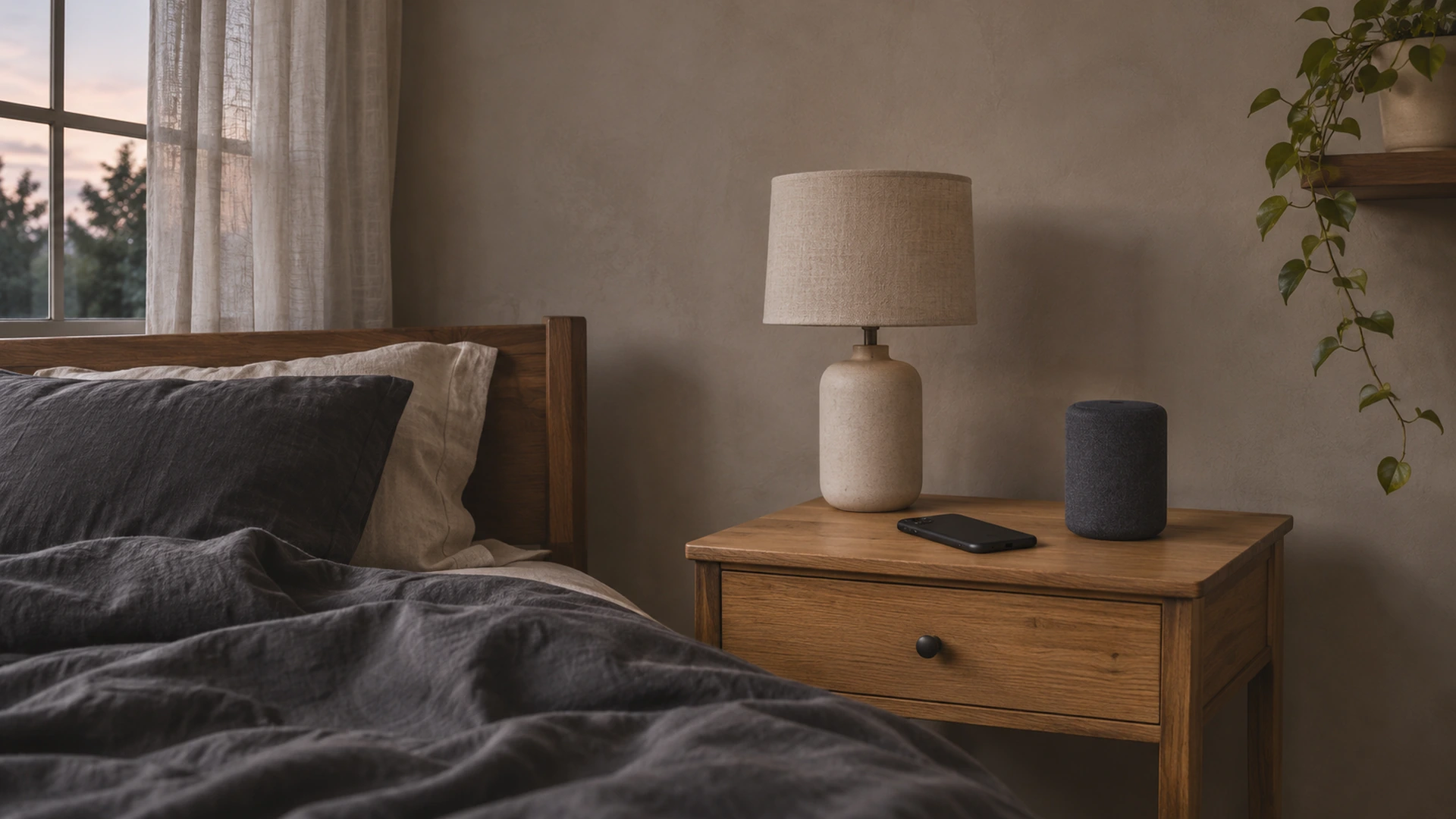
Imagine playing a rain-sound track on your phone before bed. A moment later, you hear the rain through your earbuds.
There is no cable between your phone and earbuds. Your phone uses radio waves to send audio information, and the speakers in your earbuds turn that information into sound. [2] The Bluetooth mouse on your desk does something similar. When you move it, wireless signals tell your computer where to move the pointer. Earbuds transmit audio information; a mouse transmits commands.
A laptop connecting to Wi-Fi and a phone connecting to a wireless speaker are other familiar examples of devices using radio waves to communicate.
Here, “radiation” describes how energy travels. To assess health effects, you also need to consider signal strength, actual exposure levels, and research findings. [3]
Wireless Signals in the Bedroom: Does Taking Off Bluetooth Earbuds Eliminate Radiation?
After you turn out the lights, the Wi-Fi router in your living room may still be running. The phone on your nightstand may still be connected to the cellular network. A Wi-Fi-enabled TV, air conditioner, or robot vacuum may occasionally exchange data. A smart speaker may stay online, while a connected camera may still be transmitting video.
These devices also keep transmitting signals, so taking off your earbuds does not necessarily put you in a room without radio waves.
Putting on Bluetooth sleep earbuds simply adds a low-power communication device to that familiar wireless environment. It does not take you from “zero radiation” into an entirely new kind of setting.
Still, a router may be across the room, while earbuds sit directly in your ears. How should you think about that difference?
How Does Bluetooth Radiation Affect the Body? Non-Ionizing Radiation and Thermal Effects
First, radiation can be classified by its physical properties as electromagnetic radiation or particle radiation. Electromagnetic radiation can then be divided into ionizing and non-ionizing radiation, depending on whether it has enough energy to ionize matter.
Type of Radiation | Common Examples |
|---|---|
Non-ionizing electromagnetic radiation | Radio waves, microwaves, infrared, visible light |
Ionizing electromagnetic radiation | X-rays, gamma rays |
Particle radiation | α particles, β particles, neutrons |
Bluetooth uses 2.4 GHz radio waves, a form of non-ionizing electromagnetic radiation. Different types of radiation interact with the body in different ways.
Mechanism | How It Works | Typical Examples |
|---|---|---|
Ionization | Ionizes molecules and may damage DNA | X-rays, gamma rays |
Thermal effects | Tissue absorbs energy and converts it into heat | High-intensity radiofrequency radiation, microwaves |
Photochemical effects | Photons trigger chemical reactions that may damage DNA | Ultraviolet light |
Electrical stimulation | Induced currents stimulate nerves or muscles | Strong low-frequency electromagnetic fields |
For the radiofrequency radiation used by Bluetooth, tissue heating is the main established way it interacts with the body. When radio waves reach the body, some of their energy may be absorbed by tissue and converted into heat. Bluetooth transmits at very low power. According to the U.S. National Cancer Institute, Bluetooth devices typically transmit at power levels about 10–400 times lower than cell phones. During normal use of Bluetooth devices that comply with safety standards, the resulting rise in tissue temperature is usually very small.
Can Bluetooth Earbud Radiation Cause Brain Cancer or Affect Memory?
Brain cancer is associated with genetic changes in DNA. Tumors can develop when key genes that control cell growth change and those changes accumulate. Ionizing radiation such as X-rays can damage DNA, but Bluetooth radio waves do not have enough energy to ionize molecules, so they cannot directly damage DNA through this mechanism.
Beyond brain cancer, some users also worry that Bluetooth could affect cognitive functions such as memory and attention. These functions depend primarily on nerve cells in different brain regions and the connections between them.
Cognitive Function | Main Brain Regions Involved | Possible Mechanisms of Impairment |
|---|---|---|
Memory | Hippocampus | Nerve cell damage or abnormal synaptic function |
Attention | Prefrontal and parietal lobes | Abnormal neural network activity |
Thinking and decision-making | Prefrontal cortex | Impaired nerve cell or network function |
Reaction speed | Frontoparietal and sensorimotor networks | Abnormal neural signal processing or transmission |
Sufficiently intense radiofrequency exposure can damage neural tissue through excessive heating and, in turn, affect brain function. But the heat produced by compliant, low-power Bluetooth devices during normal use is far below known levels that cause thermal damage.
Sleeping with Bluetooth Earbuds All Night: How Do Distance and Duration Affect Radiation Exposure?
Although Bluetooth earbuds sit close to the brain, radiofrequency exposure depends not only on distance but also on the device’s transmission power and the energy the body actually absorbs. Because Bluetooth operates at low power, tissue heating is usually minimal during normal, compliant use. Even when earbuds are worn all night, the body continuously dissipates heat, so tissue temperature does not rise indefinitely with wearing time.
Sleep Earbud Settings: Playback Timers and Options for Turning Off Bluetooth
Understanding how Bluetooth works may be enough to put your mind at ease. Or you may still prefer fewer wireless connections while you sleep.
You can choose the setup that suits you without trying to remove every wireless signal from your bedroom.
Sleep Timers: How to Shorten Nighttime Earbud Playback
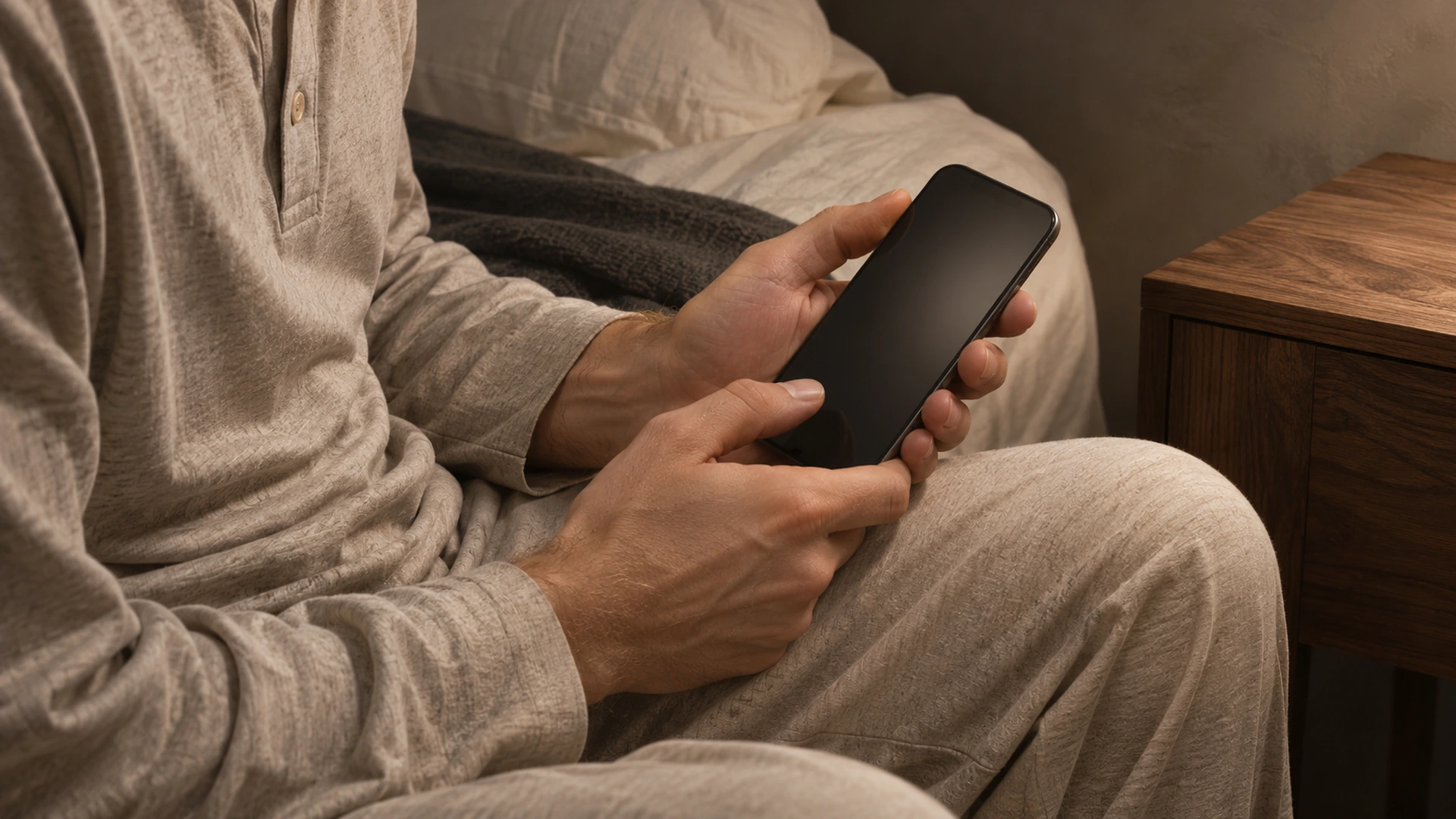
If rain sounds mainly help you relax before bed, you can set a sleep timer and turn off Bluetooth when the timer ends, rather than habitually leaving the audio playing until morning.
Does Offline Earbud Playback Still Need Bluetooth? Phone Downloads vs. Local Storage
Imagine downloading a movie to your phone before a trip. You can watch it without an internet connection, but if you listen through wireless earbuds, your phone generally still needs Bluetooth to send them the audio.
The same applies to sleep sounds. Downloading rain sounds to your phone simply removes the need to fetch the audio from the internet. It does not remove the wireless connection between your phone and earbuds. [2]
If you want your earbuds to play audio without Bluetooth transmissions, check whether they support both of these features:
Storing audio files on the earbuds themselves.
Playing those sounds with the earbuds’ Bluetooth radio switched off.
Follow the product instructions, and test your alarm and the controls you normally use before relying on this mode overnight.
Then you can choose Bluetooth streaming or local playback with Bluetooth off based on your preferences, rather than guessing what an “offline mode” label actually means.
Final Thoughts
After you turn out the lights, knowing that you will be wearing earbuds for hours may make you more aware of them. But proximity alone does not establish harm, and duration alone does not determine risk. Signal strength, actual exposure levels, and research findings all matter. Bluetooth sleep earbuds emit low-power radio waves. There is currently no substantiated evidence that these signals harm health during normal use. [1]
If you prefer shorter playback, you can set a sleep timer; if you prefer fewer wireless transmissions, you can choose a local playback mode confirmed to support turning Bluetooth off. You do not need a bedroom completely free of wireless signals as a prerequisite for feeling at ease before bed.
References
Australian Radiation Protection and Nuclear Safety Agency (ARPANSA). Wearable devices.
Bluetooth Special Interest Group (Bluetooth SIG). Bluetooth Core Specification 5.4: Architecture.
U.S. Centers for Disease Control and Prevention (CDC). Facts About Wearable Technology.
Swiss Federal Office of Public Health. Bluetooth fact sheet.
Australian Radiation Protection and Nuclear Safety Agency (ARPANSA). Reducing exposure from mobile phones.